43 coupon collector problem in r
贈券收集問題 - 维基百科,自由的百科全书 贈券收集問題(Coupon collector's problem) 是機率論中的著名題目,其目的在解答以下問題: . 假設有n種贈券,每種贈券獲取機率相同,而且贈券亦無限供應。 若取贈券t張,能集齊n種贈券的機率多少?. 計算得出,平均需要 (()) 次才能集齊n種贈券——这就是赠券收集问题的时间复杂度。 Collecting k Complete Sets of Coupons - MathPages with k=1 this is just the standard "collector's problem", which has a simple and well-known answer, namely, that the expected number of purchases is n (1 + 1/2 + 1/3 + ... + 1/n) this is analagous to a problem in reliability theory with n parallel redundant components, each with an exponential failure rate of 1/t, so the mean time to fail of …
Coupon Collector Problem - Words and Mappings | Coursera It's a well known phenomenon that has lots of applications. And that's the combinatorics of the coupon collector problem. There is a combinatorial concept called a surjection that does really need analytic combinatorics to study. So what we call a coupon collector sequence is, it's an M-word with no empty set. So that's called an M-surjection.

Coupon collector problem in r
Coupon Collector Problem - Words and Mappings | Coursera It's a well known phenomenon that has lots of applications. And that's the combinatorics of the coupon collector problem. There is a combinatorial concept called a surjection that does really need analytic combinatorics to study. So what we call a coupon collector sequence is, it's an M-word with no empty set. So that's called an M-surjection. The Weighted Coupon Collector's Problem and Applications Abstract In the classical coupon collector's problem n coupons are given. In every step one of the n coupons is drawn uniformly at random (with replacement) and the goal is to obtain a copy of all the coupons. It is a well-known fact that in expectation n \sum_ {k=1}^n 1/k \approx n \ln n steps are needed to obtain all coupons. R Program That Draw Histogram of Coupon's Collector Problem R Program That Draw Histogram of Coupon's Collector Problem Raw coupon.R random.int <- function ( n) { sample.int ( n, 1) } random.coupon <- function ( ...) { count <- 0 have.coupon <- logical ( ...) while (! all ( have.coupon )) { have.coupon [random.int ( ... )] <- TRUE count <- count + 1 } count } sample.coupon <- function ( n, size=10*n) {
Coupon collector problem in r. (PDF) Solution of the inverse coupon collector's problem The classic coupon collector's problem states that: Given that there . are N different coupons available in boxes of a certain product, what . PDF Lecture 6: Coupon Collector's problem The Coupon Collector's problem There are ndistinct coupons and at each trial a coupon is chosen uniformly at random, independently of previous trials. Let mthe number of trials. Goal: establish relationships between the number mof trials and the probability of having chosen each one of the ncoupons at least once. Note: the problem is similar ... CouponCollect.R CouponCollect.R ## Function simcollect(n) simulates the ## coupon collector's problem. ## How many draws are required to get a full set of coupons? Asymptotic Distributions for the Coupon Collector's Problem ASYMPTOTIC DISTRIBUTIONS FOR THE COUPON COLLECTOR'S PROBLEM BY LEONARD E. BAUM AND PATRICK BILLINGSLEY The Institute for Defense Analyses and The University of Chicago We sample with replacement from a population of size n, each population element having probability 1/n of being drawn. Let Wn be the drawing on which,
PDF 7. The Coupon Collector Problem - UNIVPM We will often interpret the sampling in terms of a coupon collector: each time the collector buys a certain product (bubble gum or Cracker Jack, for example) she receives a coupon (a baseball card or a toy, for example) which is equally likely to be any one of m types. Thus, in this setting, Xi∈D is the coupon type received on the ith ... The Coupon-Collector Problem Revisited - Purdue University The Coupon-CollectorProblem Revisited Arnon Boneh and Micha Hofri Computer Sciences Department Purdue University West Lafayette, IN 47907 CSD-TR-952 February, 1990 THE COUPON-COLLECTORPROBLEM REVISITED Amon Boneh- IOE Department, University ofMichigan, Ann Arbor MI 48109-2177 Micha Hofrit - Department ofComputer Science, The Technion-ITT,Haifa Coupon Collector Problem - Words and Mappings | Coursera And so how many subjection are there linked in. We'll see that this is best handled with complex asymptotics but it's N. Over 2(log 2) to the N+1. That's a classical example in combinatorics. Related to the coupon collector problem. And we'll see this coming up in more detailed studies in part two. So that's the coupon collector problem. The Coupon Collector's Problem - YouTube Get 2 months of skillshare premium here! my discord server! coupon collector's problem goes as foll...
Inverse Coupon Collector's Problem - Rebecca's Home Page The Inverse Coupon Collector's Problem can be stated as follows: For fixed i, m, what value of N maximizes the probability p ( i, m; N )? That is, given i, m, what is the most likely value of N in... Coupon Collector's Problem - Amherst College Clearly X 1 = 1. On each draw, the probability of collecting a new coupon, given that we already have k − 1 different coupons, is p k = N − ( k − 1) N. That is, X k follows a geometric distribution and E ( X k) = 1 p k = N N − k + 1. Solved 5: Coupon collector's problem From Wikipedia, the | Chegg.com (b): Write an R function that draws numbers from the 900 (100 − 999) numbers with replacement. Use n = 900 and T = 5000, count how many distinct numbers are drawn in the 5000 samples (for example, 880 distinct numbers were drawn in the 5000 samples). Run the function 1000 times and plot the histogram of the results. Write a summary of your results. PDF Using Stirling numbers to solve coupon collector problems Marko R. Riedel March 13, 2019 The coupon collector problem has been studied in many variations, from ba-sic probability to advanced research. For an introduction consult the Wikipedia ... This was math.stackexchange.com problem 1609459. 2 Drawing coupons until at least j instances of each type are seen
Kristian Merwin – Nectar Collector – Greendealzaz.com
Coupon Collector Problem Code - MathWorks I've been trying to create a program to calculate the mean time taken to collect all coupons in the coupon collector problem. It is known that the expected time to do this is roughly n*log (n). Through just general trials with large numbers of repeats, my answer for E (T) never seems to be n*log (n) and I can't figure out why.

PPT - Discrete Probability PowerPoint Presentation, free download - ID ...
Help with Coupon Collector's Problem : R_Programming - reddit Hi, I'm struggling with a script in R to simulate the coupon collector's problem. Any help would be greatly appreciated! Here's the exercise: Write a function coupon (n) for simulating the coupon collector's problem. That is, let X be the number of draws required to obtain all n items when sampling with replacement.

Info on Printable Coupons
r-simulations/CouponCollector.md at master - GitHub actual_expectation_for_coupon_collector = function ( n) { # This is the E (X) for the coupon collector problem (1/n * (sum (1/j) for j from 1 to n)) n* (log ( n) + 0.577 ) } Results and Visualization Now that everything is in place, let's run some simulations and try to visualize them:
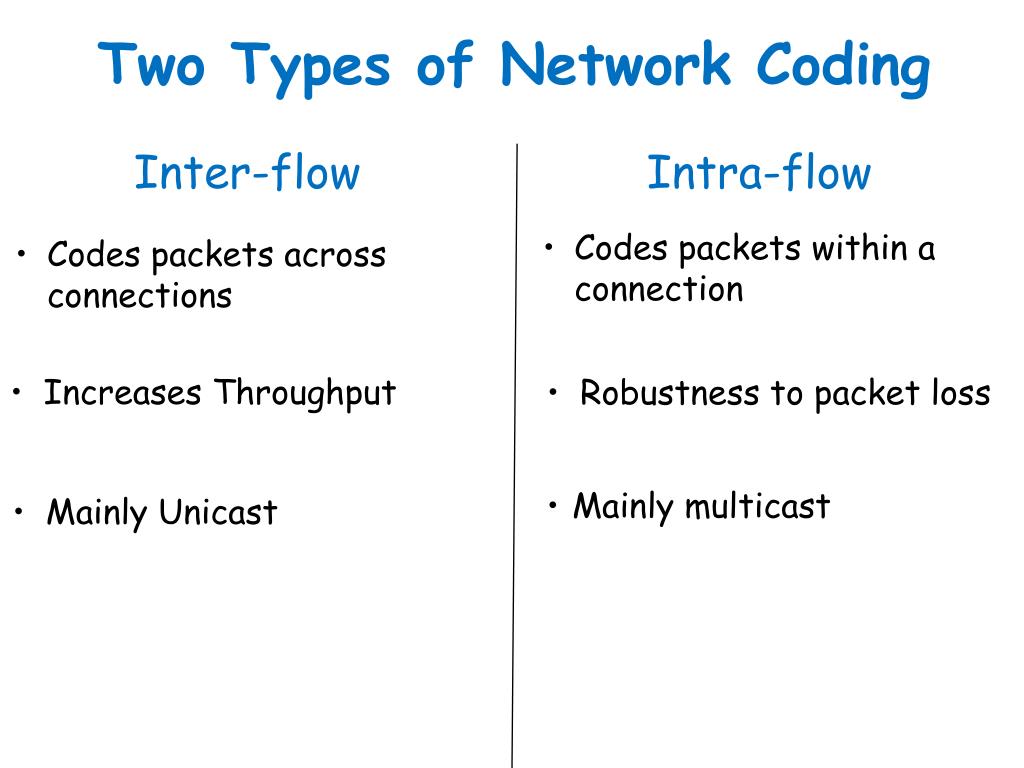
PPT - Wireless Network Coding PowerPoint Presentation, free download ...
Dice Probability: Median Rolls to See All 6 Sides (Coupon Collector's ... To be clear, this is a coupon collector's problem, not the coupon collector's problem. But engaging it is a step in the direction of understanding more general solutions. You can read about the general problem at the "Coupon Collector's Problem" Wikipedia entry, but it doesn't mention the median there. Nor do any of the papers on ...
Monty Hall Problem - Wolfram Demonstrations Project
PDF Collecting coupons — A mathematical approach - ed Asymptotics for the maximum in the coupon collector's problem. Math. Scientist, 27, 85-90. Wilkins, J. L. M. (1999). Cereal box problem revisited. School Science and Mathematics, 99(3), 193-195. 35 A u s t r a l i a n S e n i o r M a t h e m a t i c s J o u r n a l 2 0 (2) C o l l e c t i n g c o u p o n s ...

(a) Inequalities involving stationary distributions for a sample ...
Simulating the Coupon Collector's Problem - The DO Loop I want the simulation to work for the coupon collector's problem with K coupons, so I'll use a little probability theory. You can look up formulas for the mean and variance of the survival time as a function of K. For my simulation, I will use L = mean + 2*StdDev as the maximum number of rolls in each trial. When K =6, L is 41.
Post a Comment for "43 coupon collector problem in r"